
Visual Diary: Artist Portrait
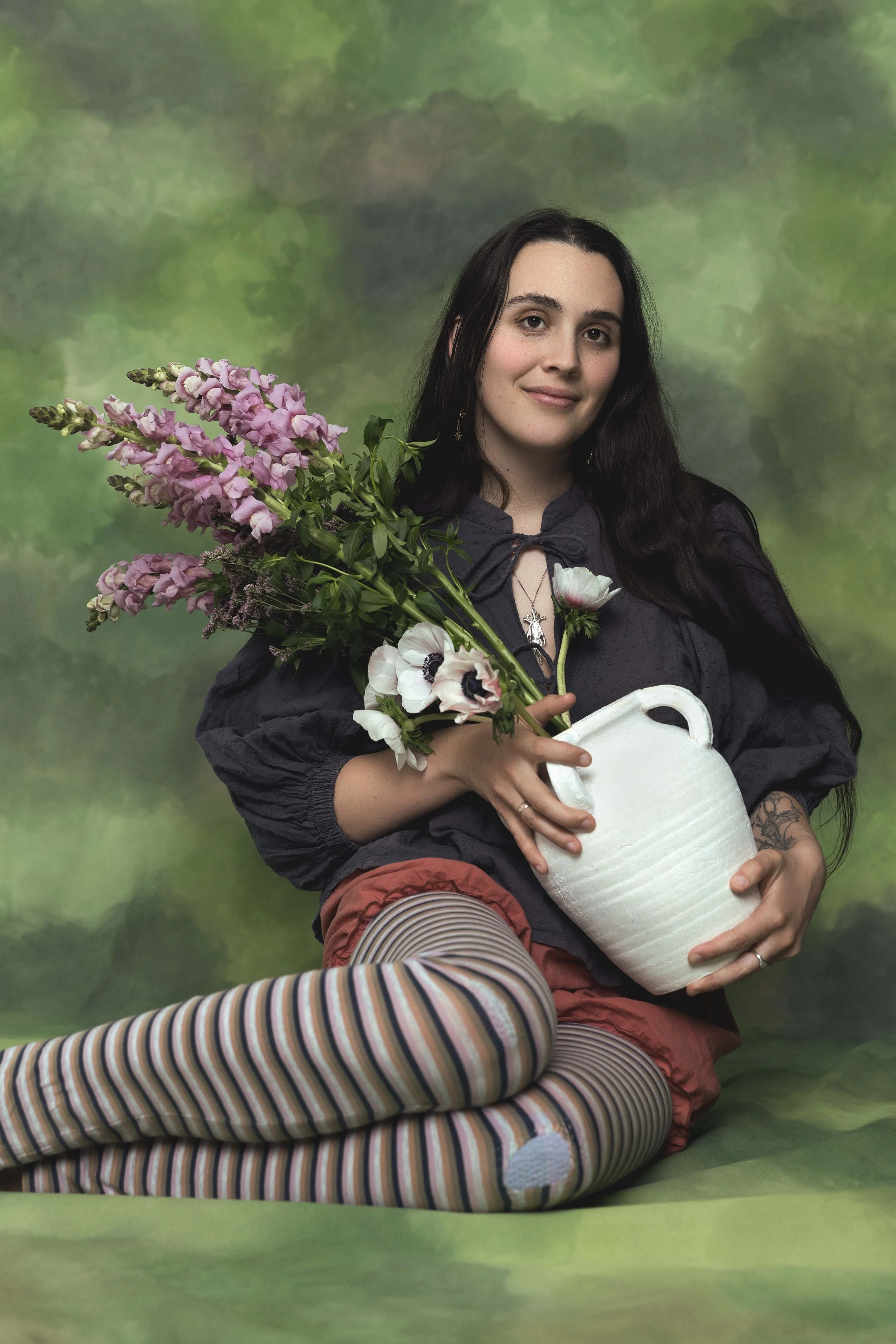
Yasmina Gillies always has beautiful insight into the ideas and influences that drive her work. During a recent conversation about our respective creative practices, she reflected on her experience of painting highly detailed natural forms, explaining “When I'm painting something detailed like moss or a forest, it feels like I'm in a relationship with the nature I'm trying to represent. I'm always striving to do it justice, knowing I’m not getting every detail quite right, but treating it as a practice of devotion.” Her words encapsulate a tension inherent to all representational practices: the impossibility of fully capturing reality, even with care and attention. This idea echoes the writings of Annette de Vries, who argues that “it is generally accepted that transmission tout court is unthinkable. There is always someone or something by which what is being transmitted is changed in the course of transmission.”¹ (Here tout court means “without qualification” or “in an unaltered form”.)
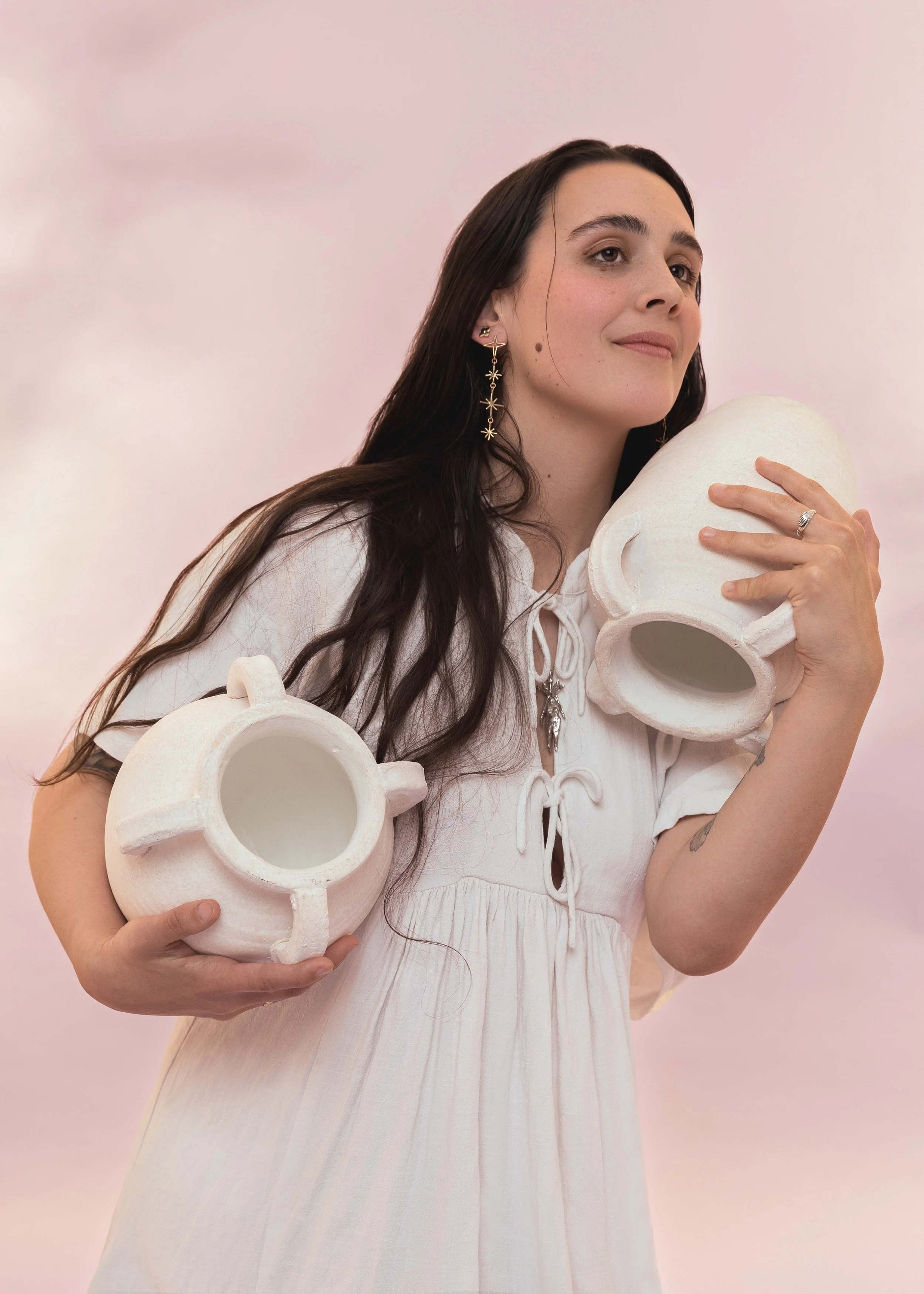
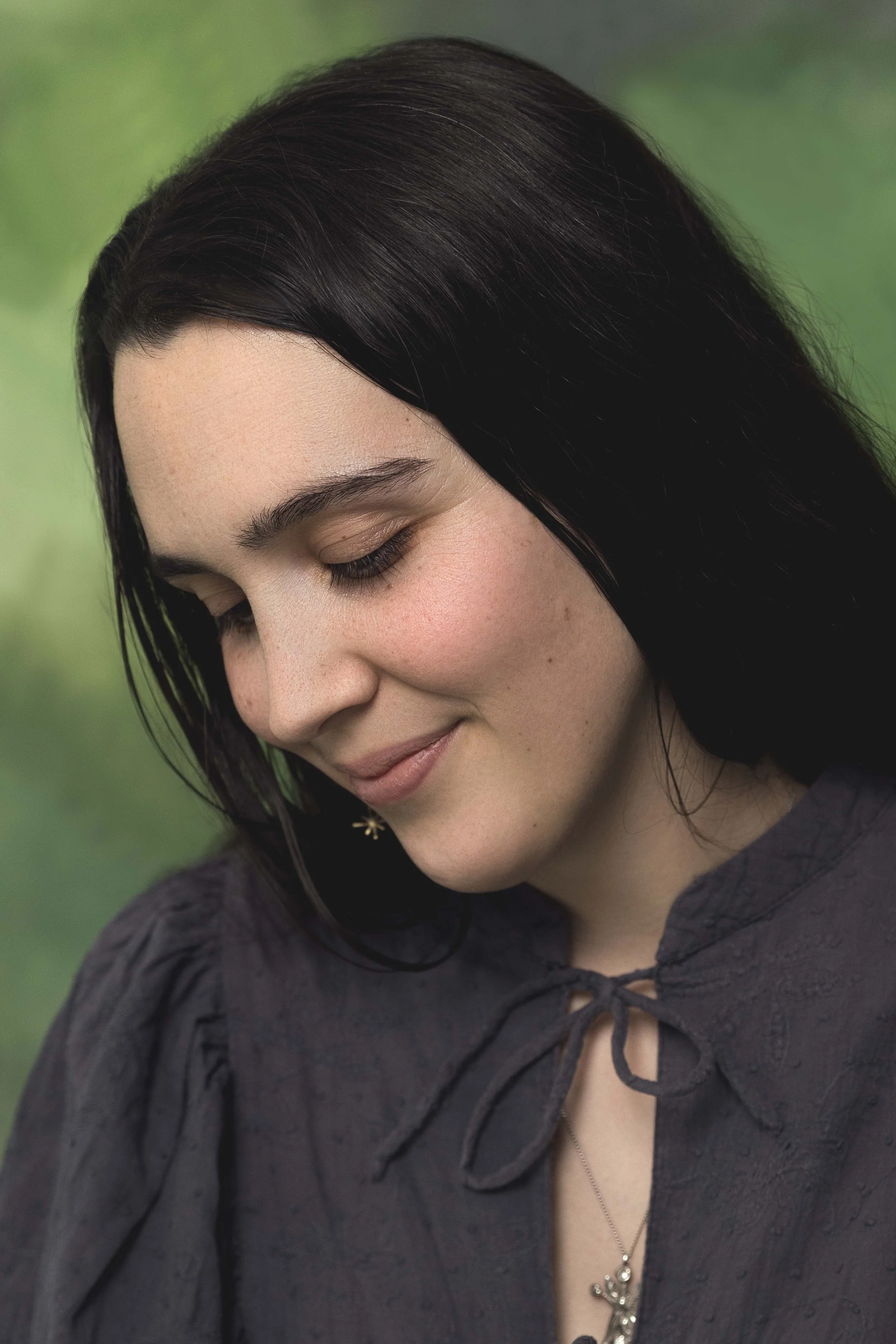
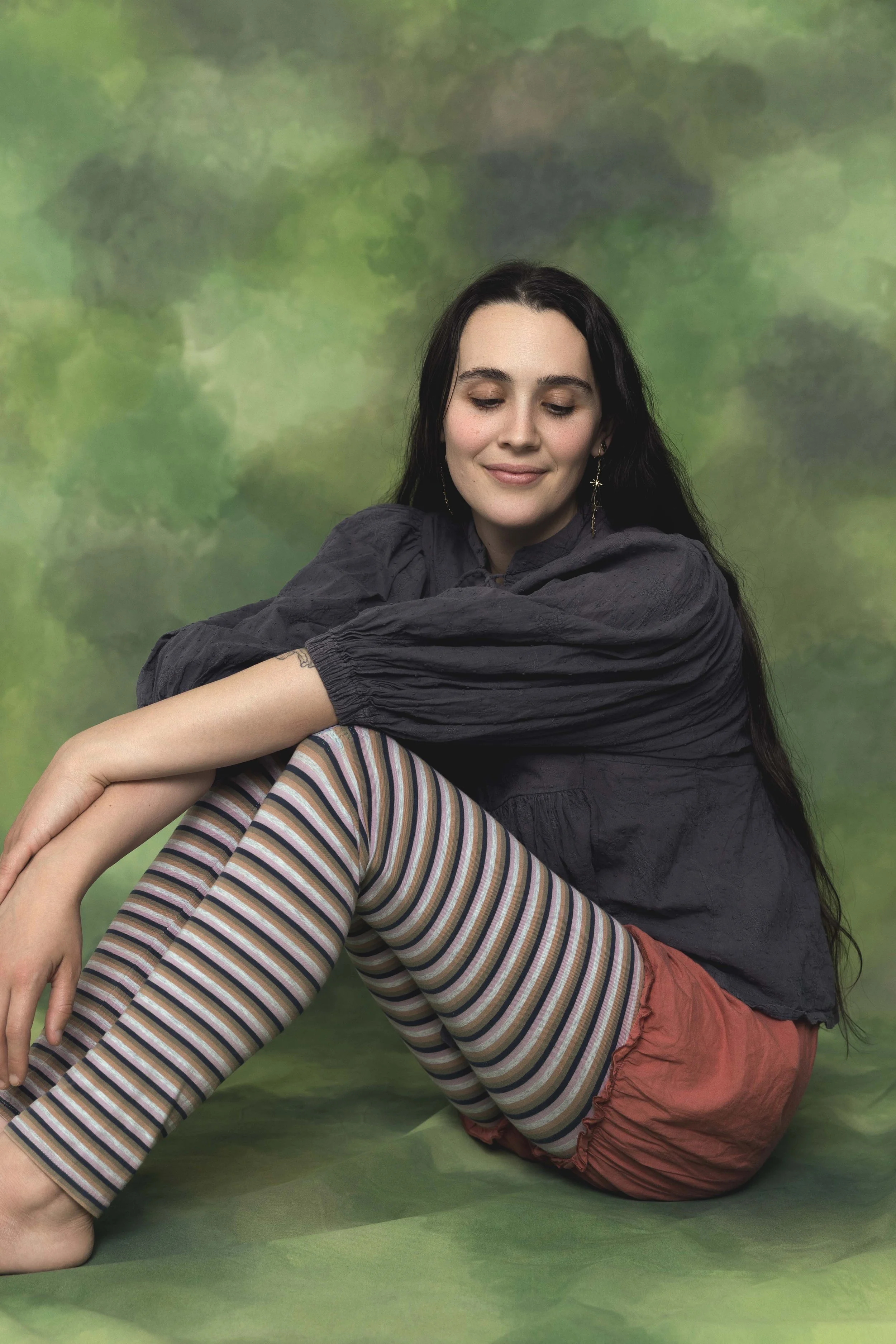
Like Yasmina, I too find endless inspiration in the idea of representation. I am particularly interested in how this applies when photography is the medium of transmission. While the camera appears to capture reality, photographs are just as much an interpretation of the world as paintings and drawings are.² A photograph, with its illusion of objectivity, may be viewed as deceptive, but I believe this quality opens the possibility of portraying someone beyond their physical likeness. In these portraits of Yasmina, I sought to capture, who she is, her internal world, her creative identity and the symbolic currents that flow through her work. In many ways, this project became my own attempt to do justice to the details of Yasmina, knowing that, like all acts of representation, it could never be complete.
“It is impossible for me to envisage a picture as being other than a window, and why my first concern is to then know what it looks out on.”³ wrote André Breton in his 1928 essay Surrealism and Painting. To know what my own window looks out on, I first considered the qualities and associations that arose when thinking of Yasmina: dreamy, mother, magical, soft and connected to nature. Recognising the limitations of my own perceptions, I turned to symbolic systems as a way of counterbalancing personal bias and deepening interpretive insight. Within the Surrealist movement, women artists were central in the search for a language capable of giving form to inner life, using automatism, divination, and nature as techniques to liberate the imagery of the unconscious.⁴ Alongside this knowledge, I reflected on my experience of being in front of the camera during a shoot with my photography mentor, Maegan McDowell, who combines photography and tarot to guide journeys of self-discovery and acceptance, encouraging authenticity and femininity through her work, Oasis With Mae.⁵ It was during this shoot I felt the uncovering of something beyond conscious performance or self-presentation. Drawing upon these influences, I incorporated tarot as both a source of symbolic imagery and a guiding framework through which to construct a visual narrative and create a space where inner and outer worlds could coexist.
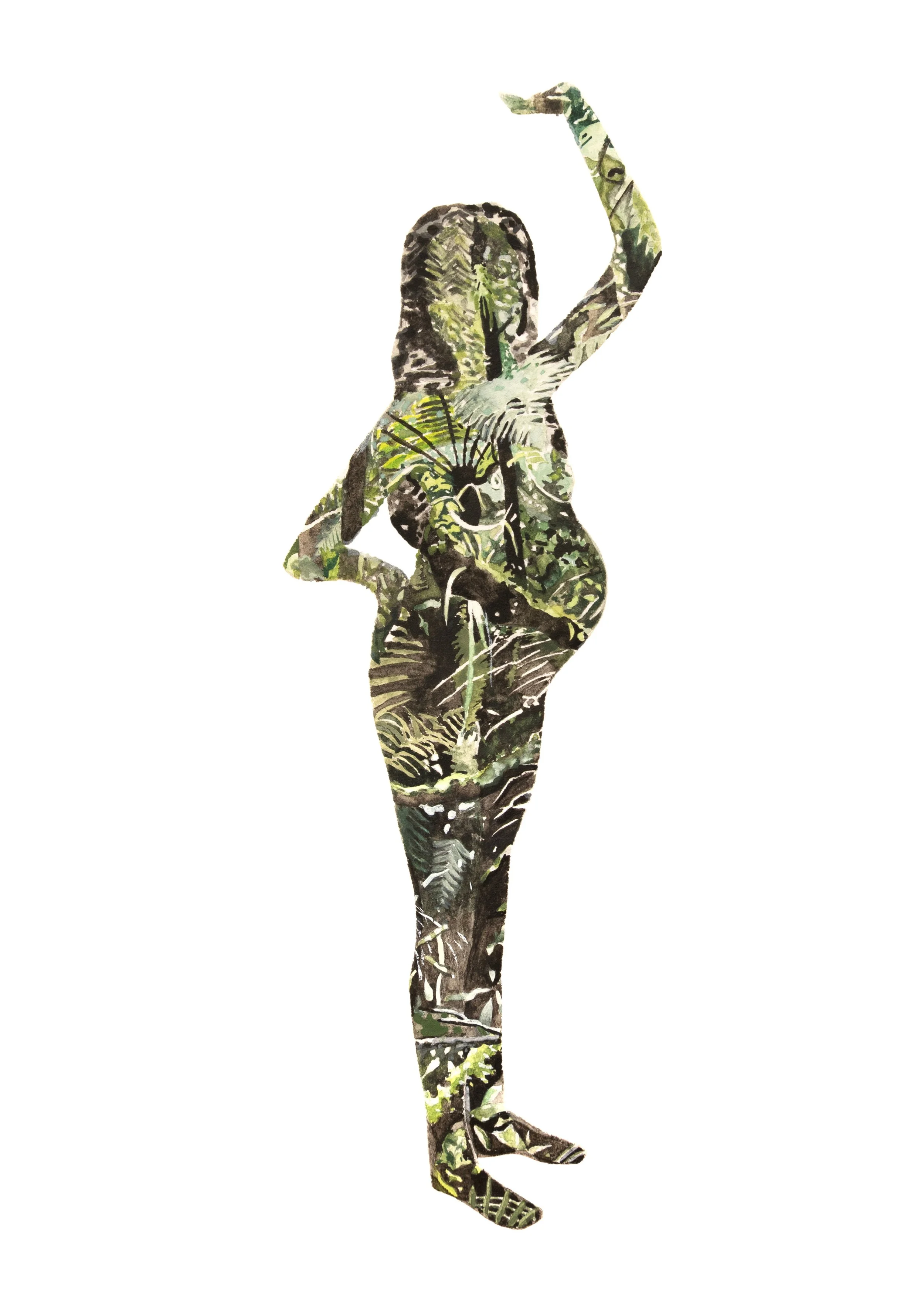
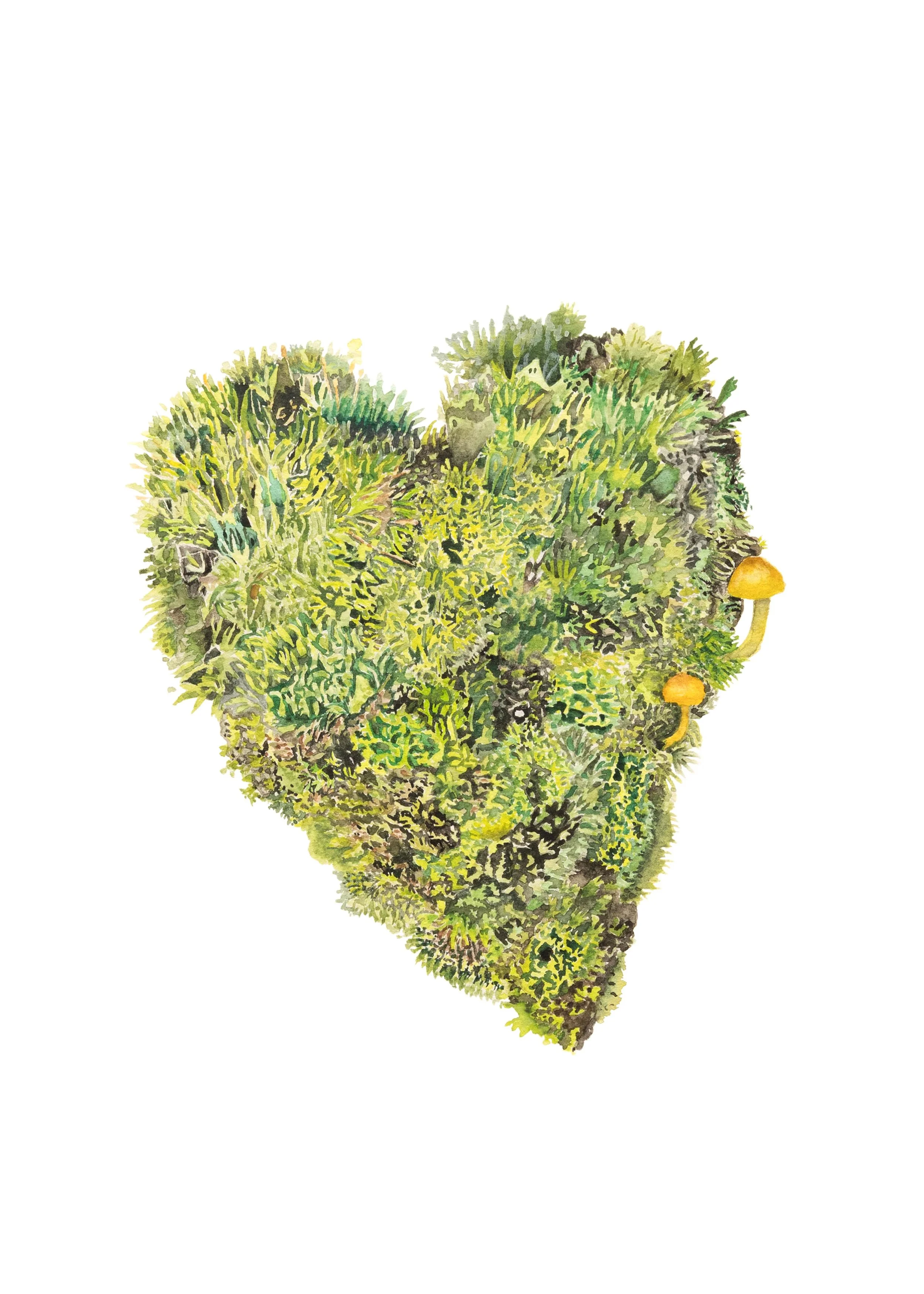
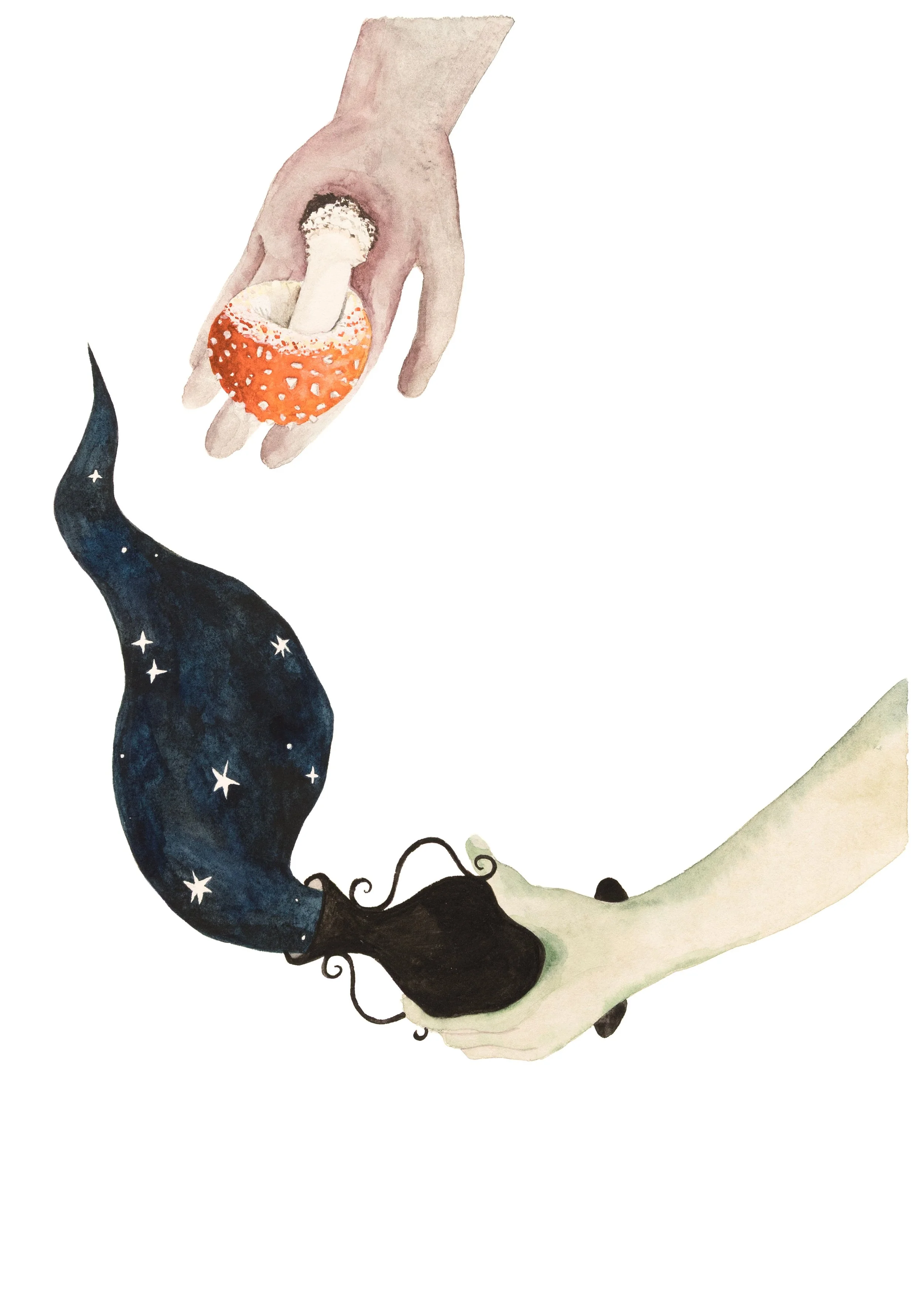
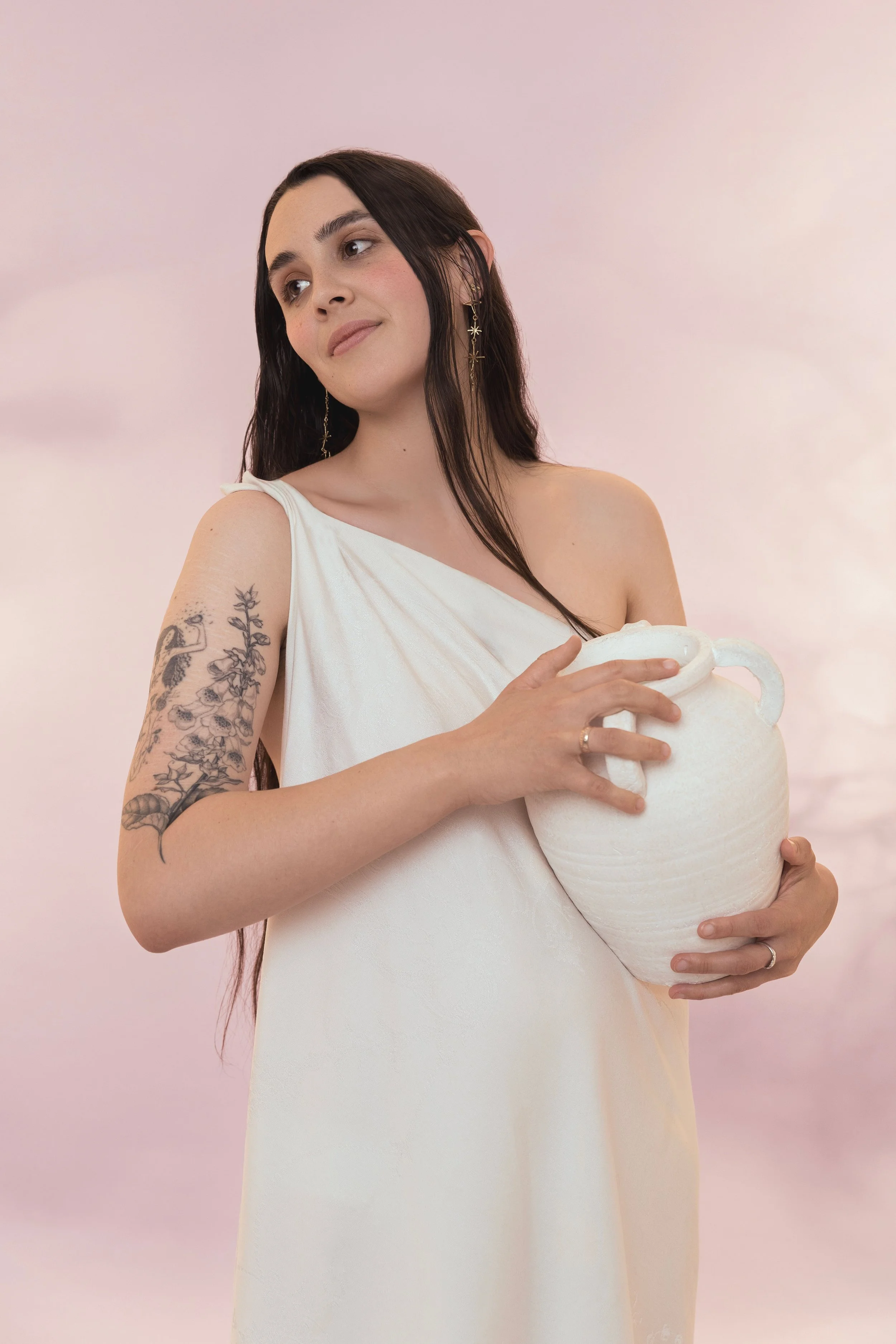
The vessel is a recurring symbol throughout Yasmina’s work: a symbol of the feminine, protection, nourishment, transformation, creativity, the womb, and the threshold between inside and outside. It was while reflecting on the tarot cards that the phrase “to give birth to an idea” stood out to me. It illuminated the interconnectedness between motherhood and creative practice. From the inception of an idea, to nurturing a creation as it grows, and eventually sending it out into the world where it takes on a life of its own, the creative process mirrors the cycles of motherhood. This connection has been recognised for millennia. For example, we see the linking of both children and creativity through the astrological fifth house. While often associated with fun, play and joy, the fifth house also represents our legacy: what remains of us after death, and the ways in which our lives continue on.⁶ This continuation may take form through children and lineage, or through the things we create and the great works we leave behind. Suggesting that the impulse towards legacy may therefore not reflect self-importance, but reveals that the human need to love, share, and connect is so powerful that we long for something of ourselves to remain, something that carries the warmth of our love, ignites in others the same passion we felt for our creations, and can reassure someone that they are not alone.I think this passage from my favourite book captures the essence of this idea beautifully:“It is as if love, by its fluid nature, its riverine force, is all about the melding of markers, to the extent that you can no longer tell where your being ends and another begins.”⁷
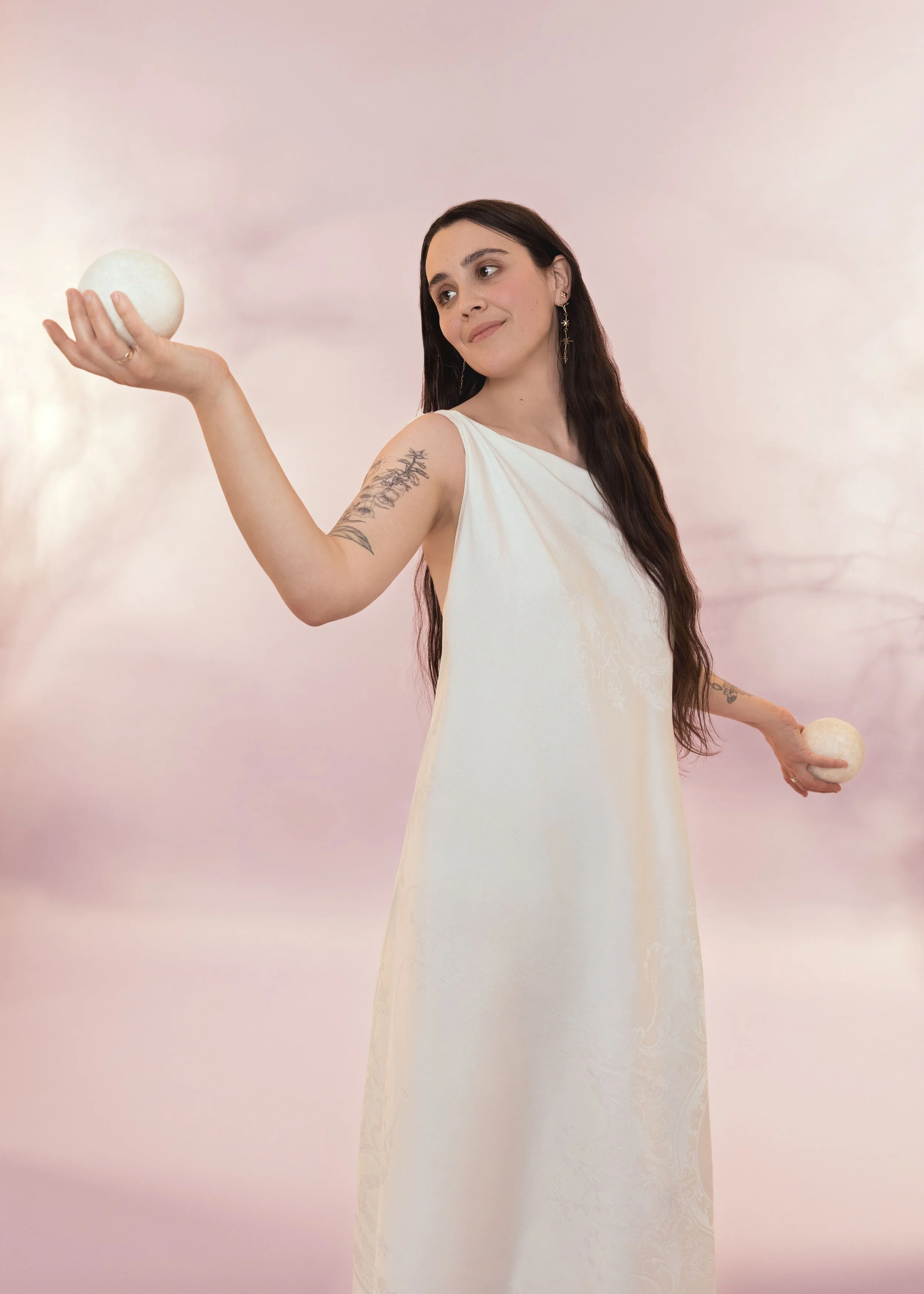
When Yasmina and I plan to spend time together, we only ever have to organise a time and day. There is a tree in a park that has become our spot. Having now known Yasmina for nine years (though the tree has known her longer), that tree has listened to countless hours of us discussing art and sharing ideas, thoughts, dreams, and feelings. Over that time, I have witnessed a shift in the way Yasmina understands and embodies power, moving from the external powers of the mystical and magical towards the grounded, connective powers of nature, children, the internal world, and the tangible. She beautifully describes this as “real magic”. Under our tree, I asked her what holding her power looked like to her, she responded: “Balance, Knowing where your power comes from, who and what is behind and beside you. Softness, being able to flow even with heaviness. Strong like a willow: bend to be strong.” It’s no wonder, then, that among her cards was the Wheel of Fortune, depicting the alchemical symbols of mercury, sulphur, water, and salt. Together, these represent the building blocks of life and the four elements, symbolising formative power and balance.⁸
Translating To A Visual Narrative
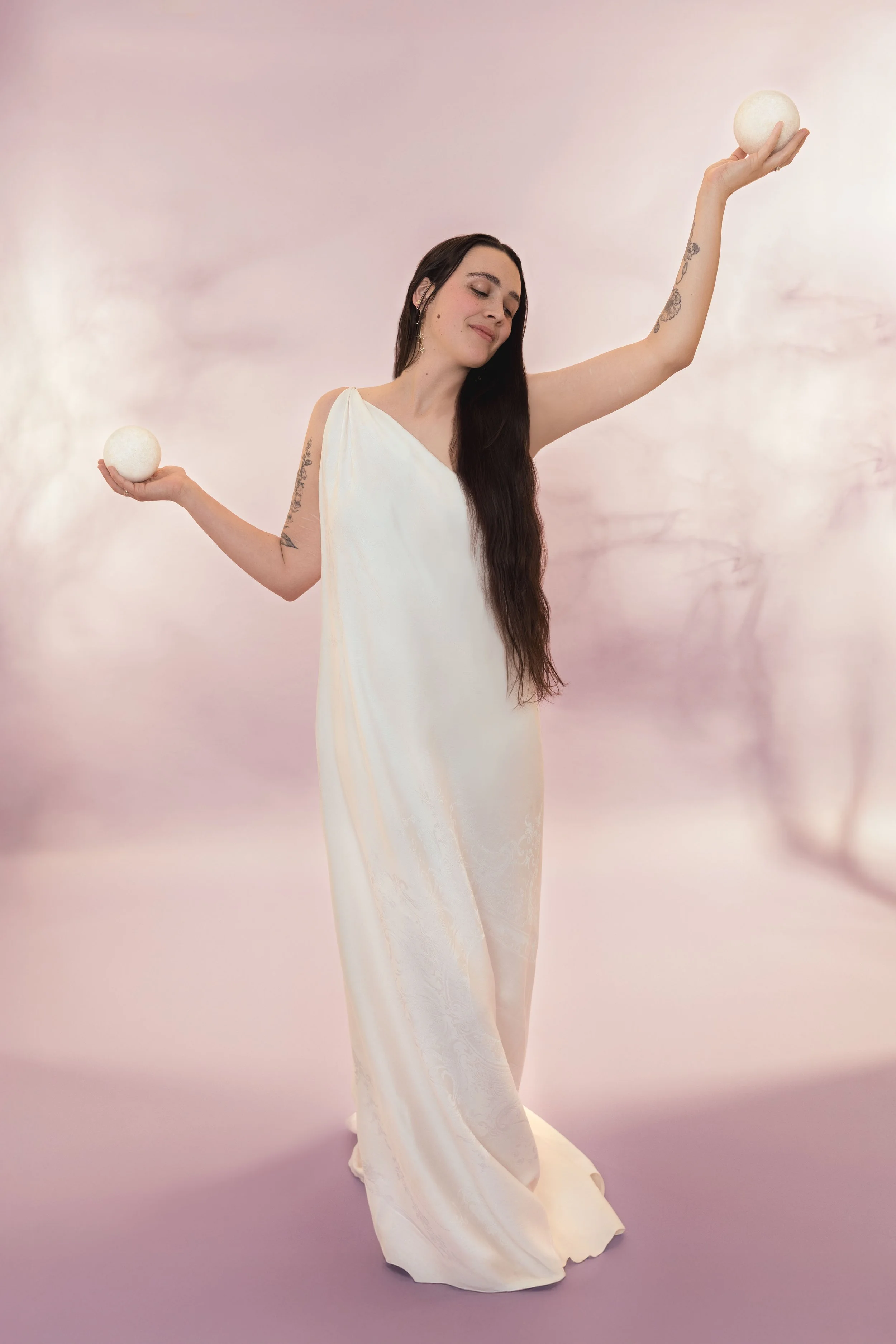
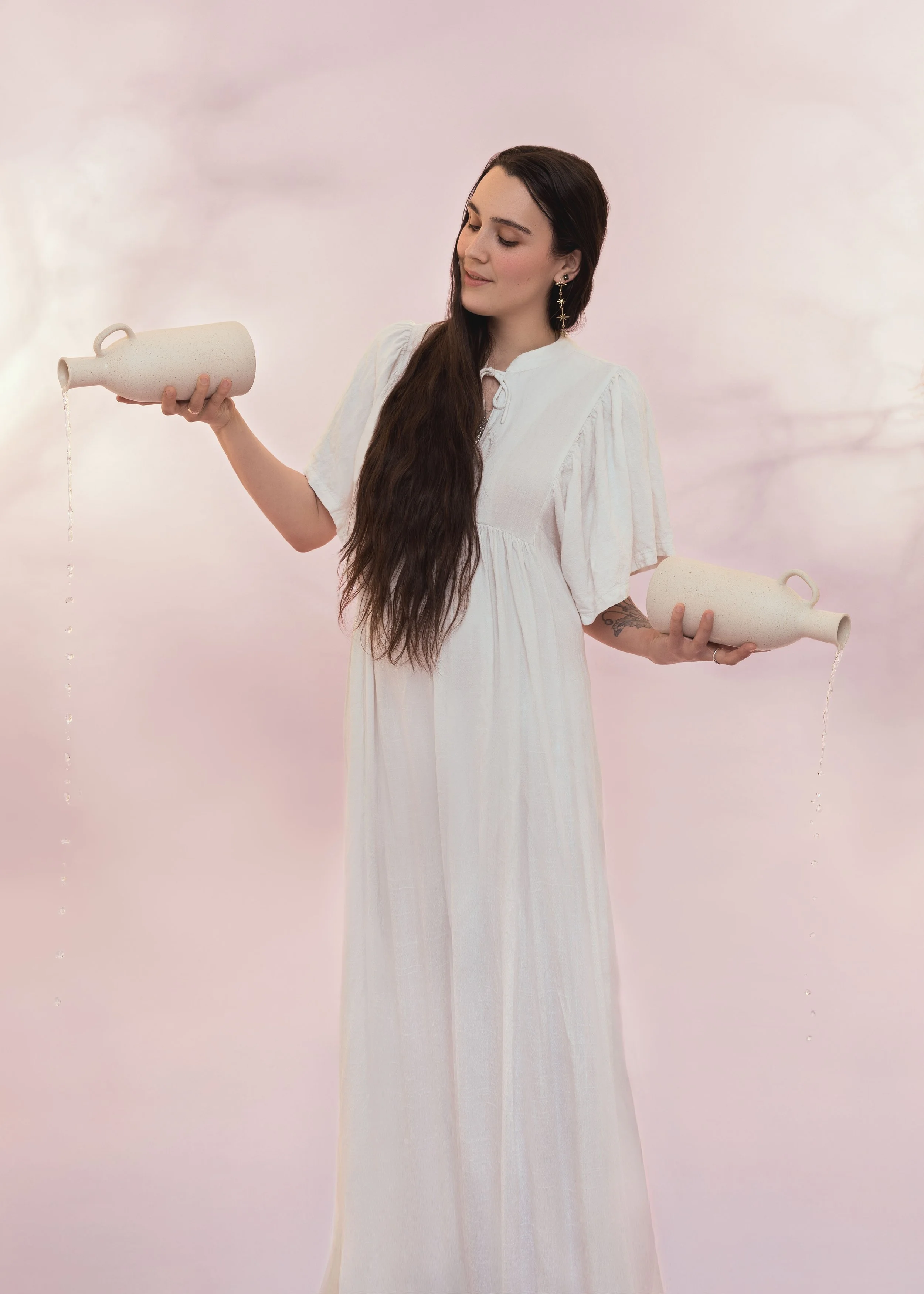
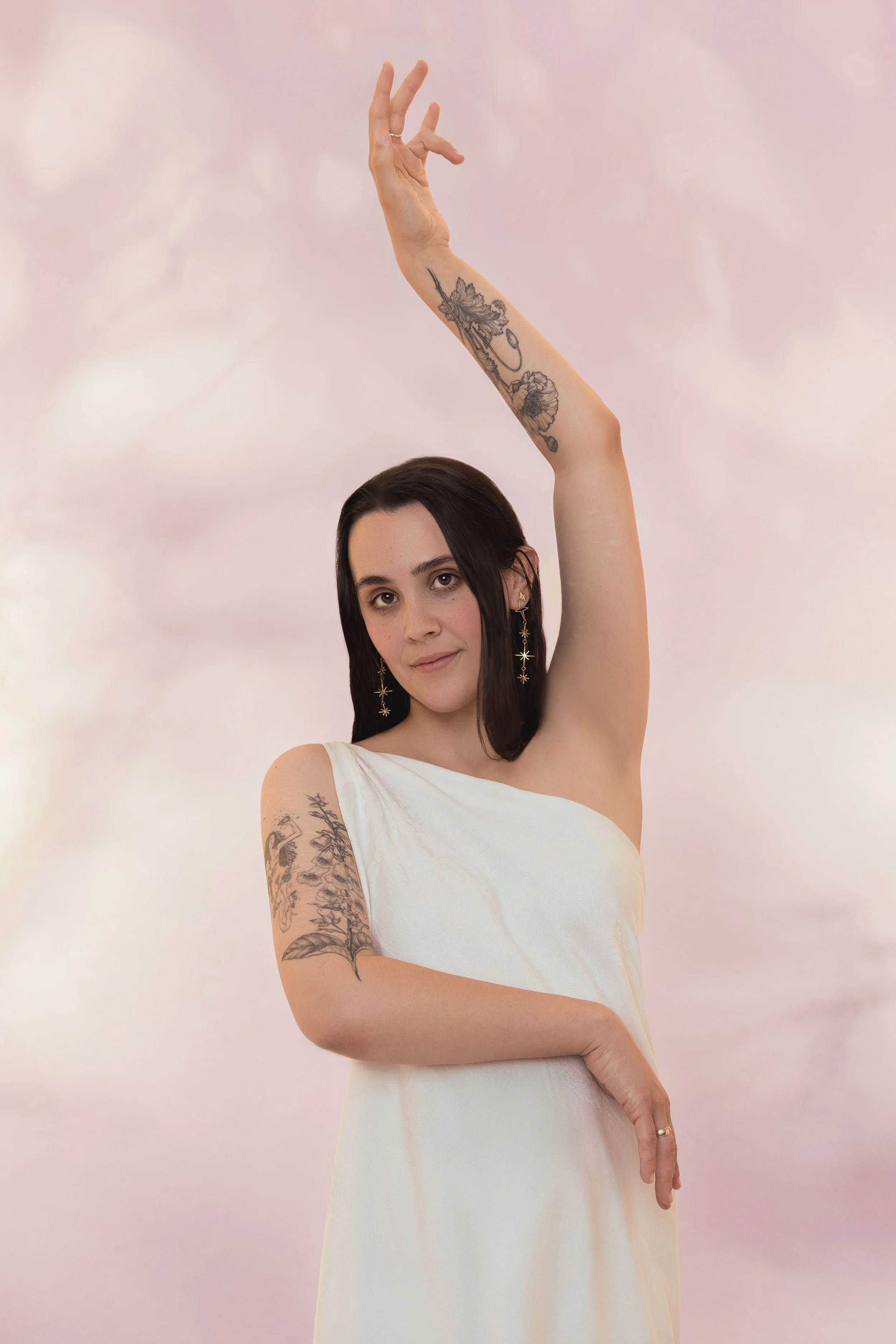
Real magic. The intertwining of motherhood and balance.
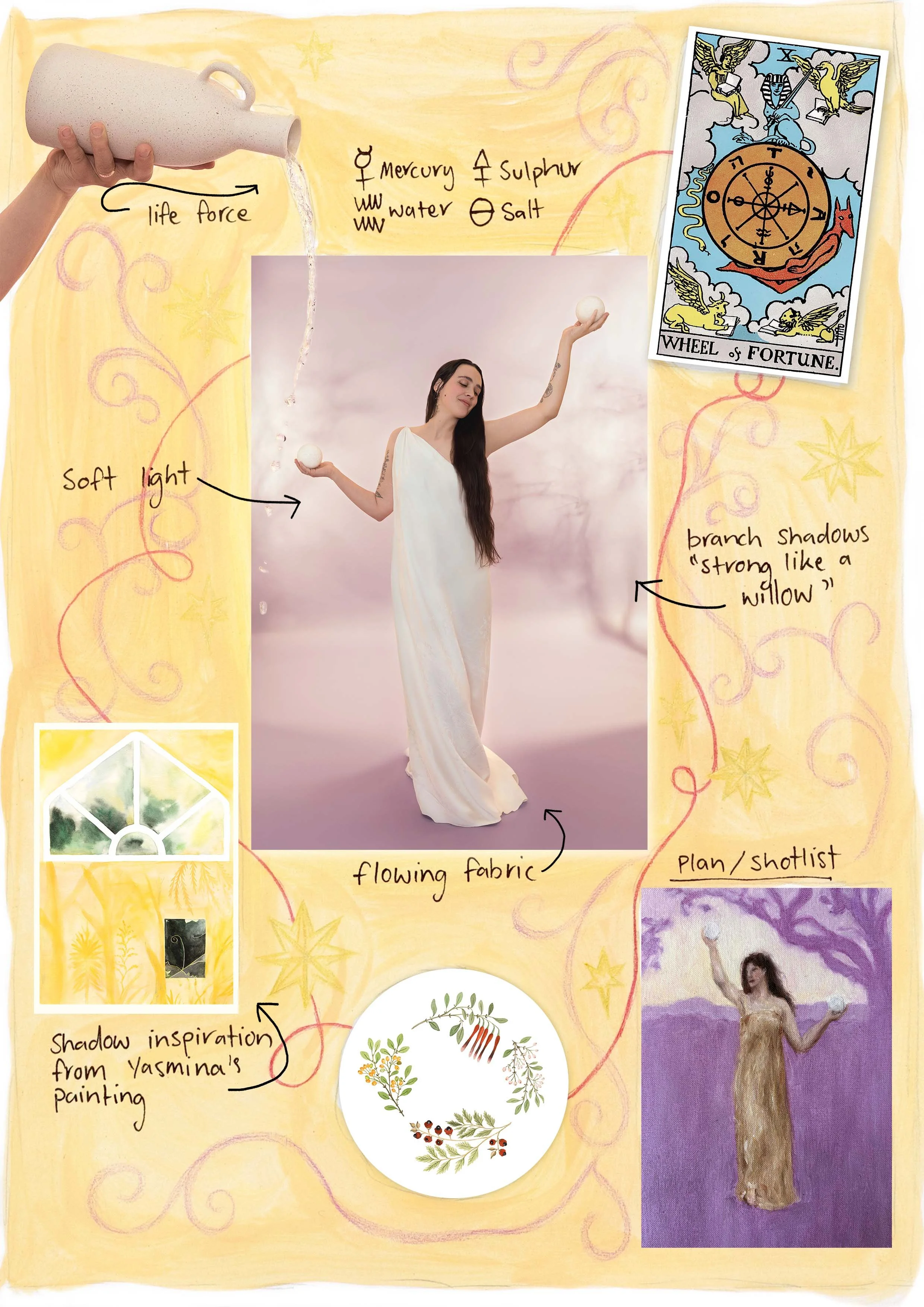
Shadows cast from branches fall across the soft pink backdrop, behind and beside her. Soft light wraps around her as she embodies a feminine strength rooted in balance, softness, and flow.
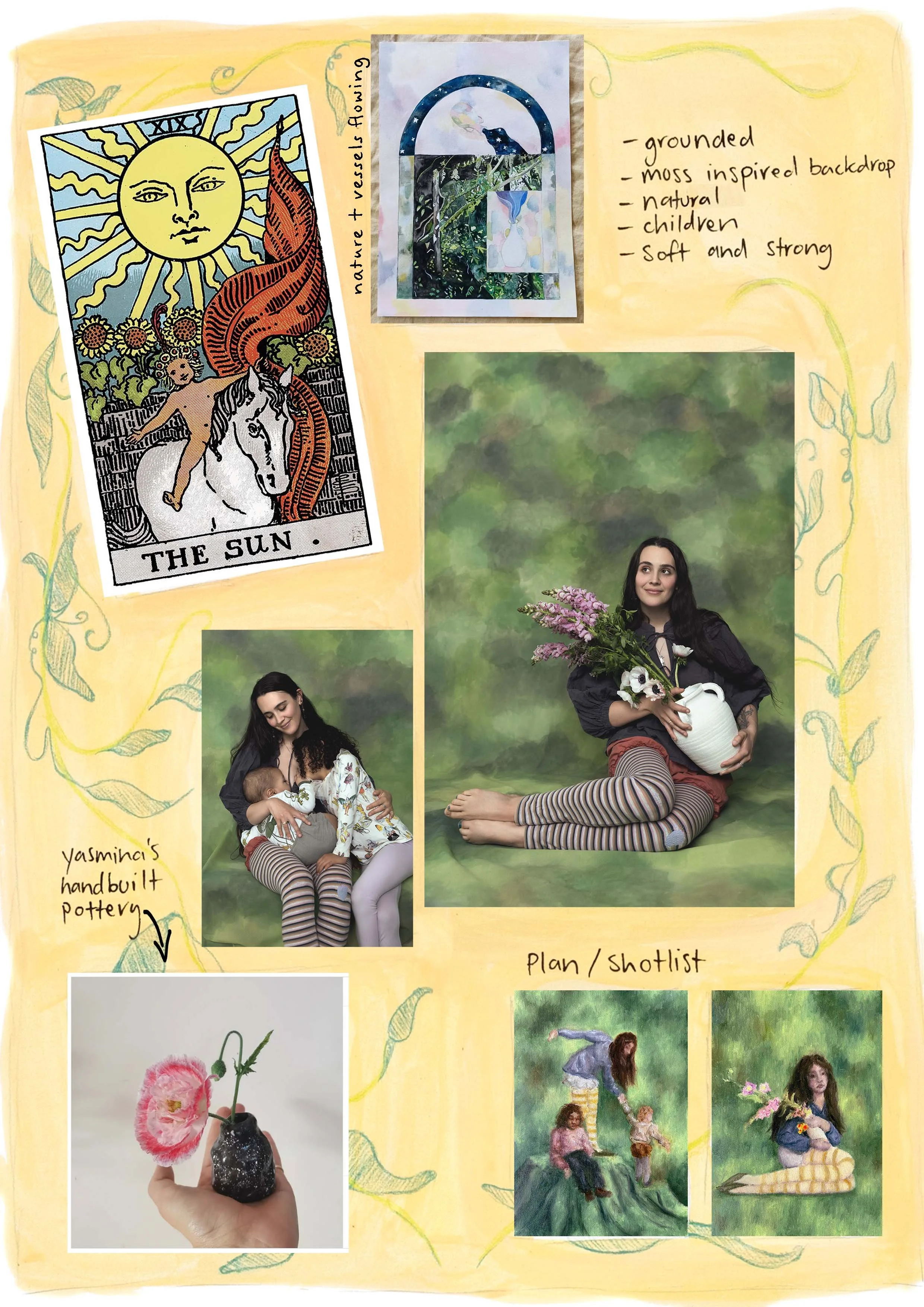
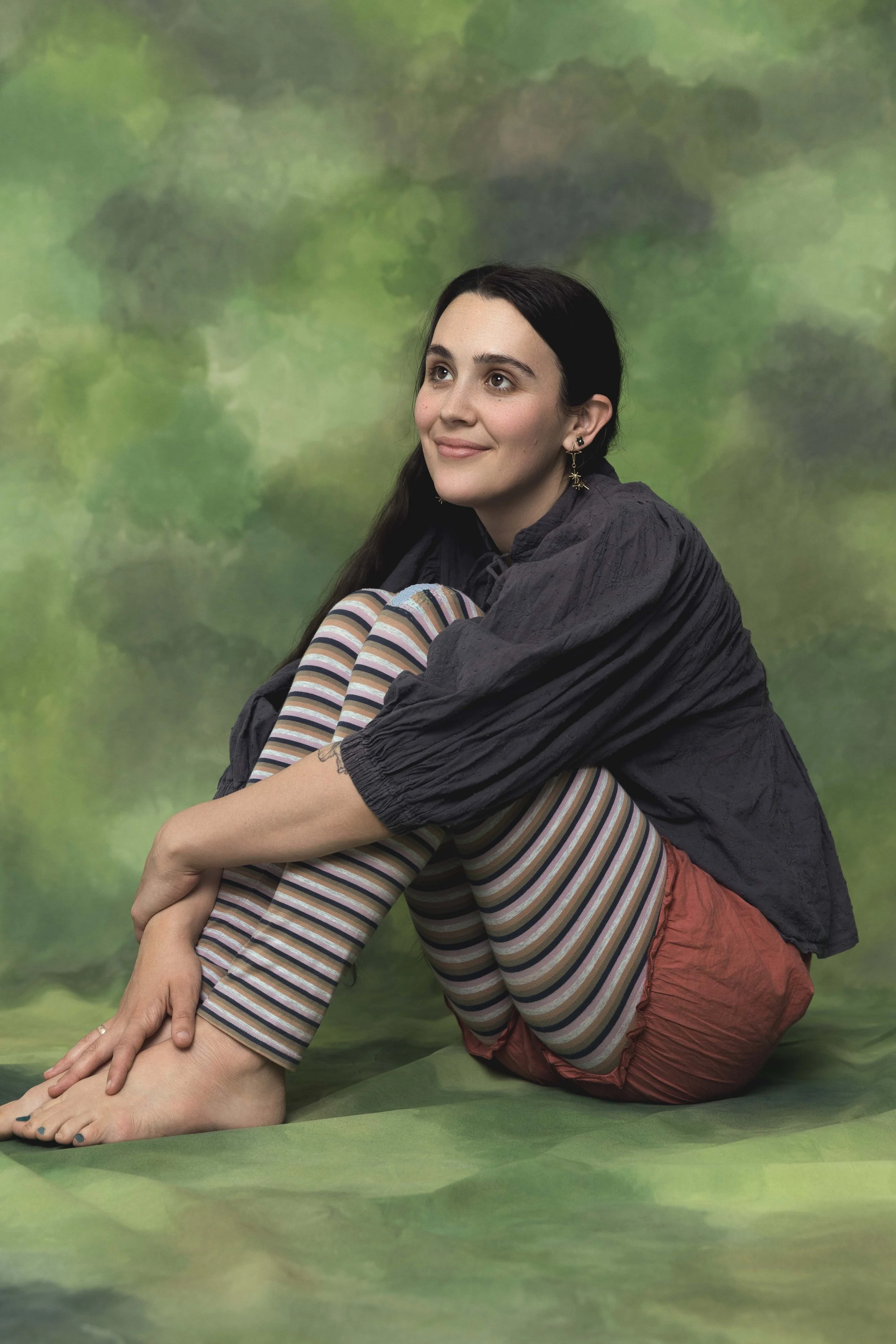
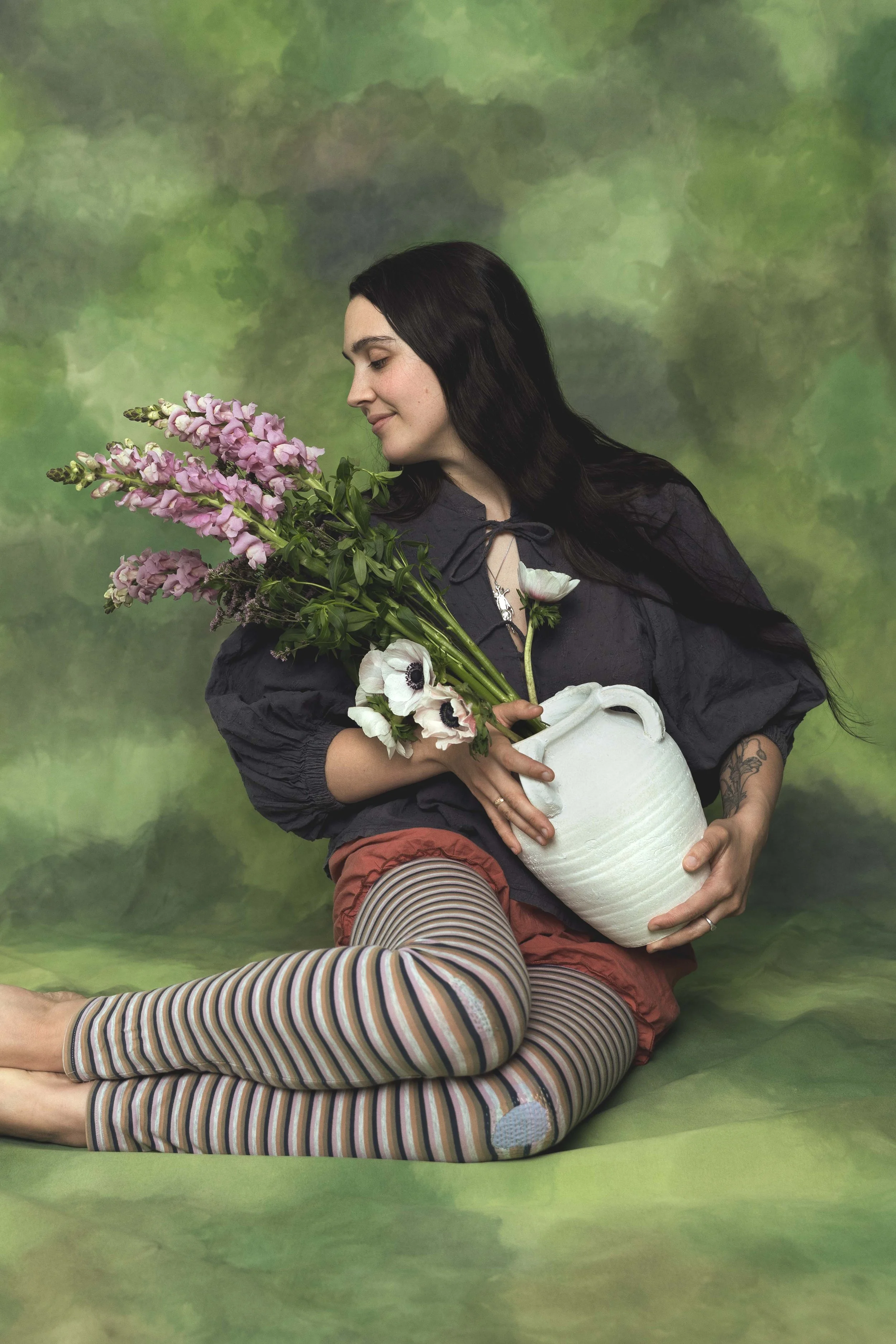
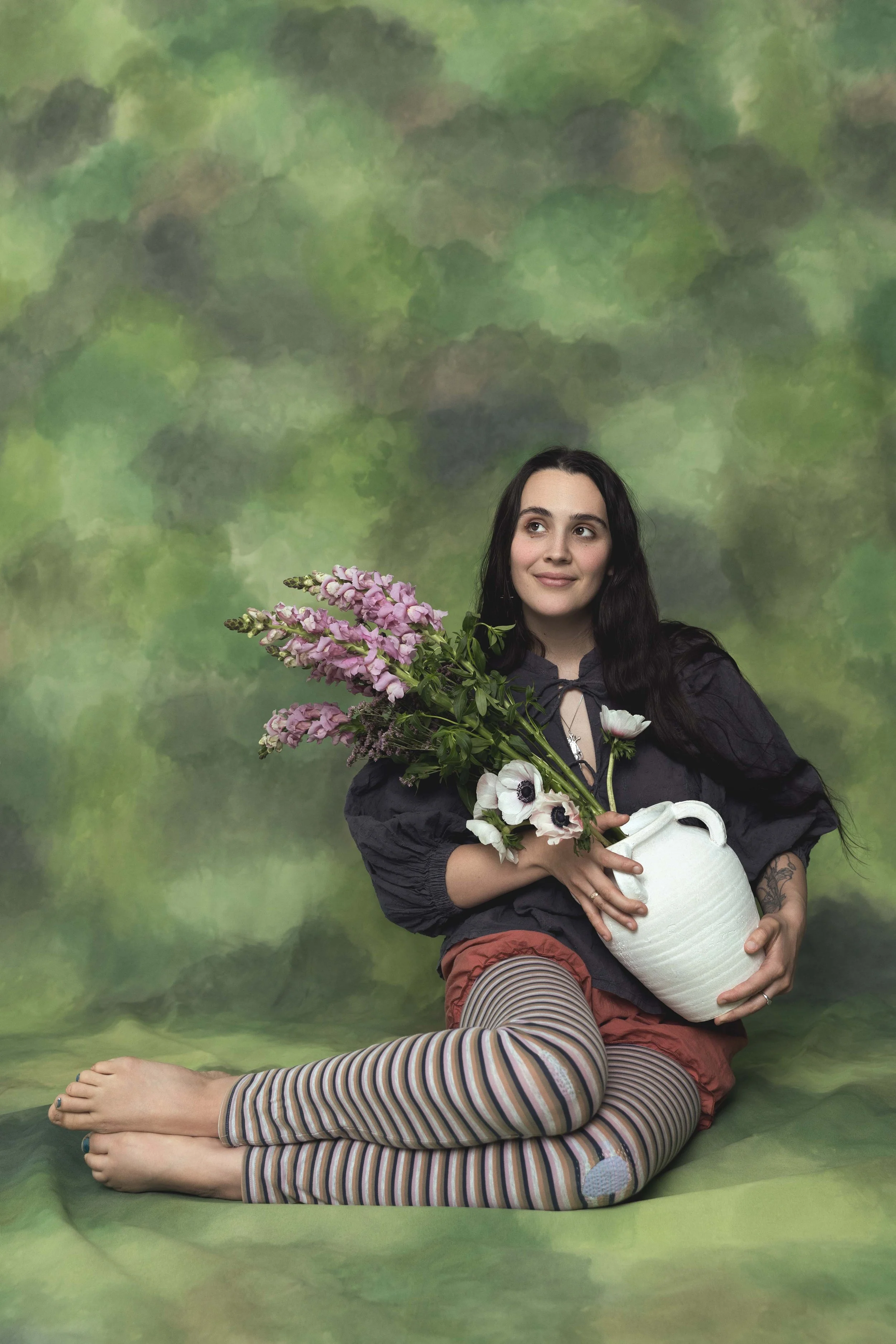
Grounded on a moss-inspired painted backdrop, holding a vessel filled with flowers. Her children share the space with her: she breastfeeds her baby while her eldest climbs across her - a pillar of strength, tenderness, and balance.
Reflection
This project has taken me more time than I’d like to admit to complete (while re-editing this writing I had to change the number of years we have known each other). I feel as though I have been on a journey: every project I undertake begins at my bookshelf, where I gather the books I feel will guide my thinking along the way.
Ten months ago (there, I admitted it) I picked up The Mythic Quest, which opens with the Epic of Gilgamesh. Last week I began reading There Are Rivers in the Sky, which opens with a king who loves the Epic of Gilgamesh more than any other story. I knew it was time to send this work out into the world; it was ready months ago.
Coming to the end of a journey is never easy. Neither Yasmina nor I are the same people we were when it began, and perhaps that is the point: you never return from a journey unchanged. Reflecting now, I loved having Yasmina within this project, striving to do justice to the details of her, aiming to create a space where her inner and outer worlds could be represented together, so much so that I found it difficult to let go. I lingered over every detail and even wrote about the whole process. I didn’t want it to end; I wanted to share every part of the journey, not only the final outcome.
But now it is time to make space so that when we return to our spot, there can be new ideas, new dreams, new projects, and new feelings for the tree to hear us exchange.
Eilish
Sources
1. de Vries, A. (Ed.). (2008). Cultural Mediators. Peters.
2. Sontag, S. (2019). On Photography. Penguin Books.
3. Breton, A., Watson Taylor, S., & Polizzotti, M. (2002). Surrealism and Painting. MFA Publications.
4. Chadwick, W. (2021). Women Artists and the Surrealist Movement. Thames & Hudson.
5. McDowell, M. (2019). Oasis with Mae. https://www.oasiswithmae.com
6. Brennan, C., & Coppock, A. (2025, November 16). TAP Ep. 508 transcript: October astrology forecast 2025. The Astrology Podcast. https://theastrologypodcast.com/tap-ep-508-transcript-october-astrology-forecast-2025/
7. Shafak, E. (2024). There Are Rivers In The Sky. Penguin.
8. Biddy Tarot. (n.d.). Wheel Of Fortune Tarot Card Meanings. Retrieved November 23, 2025, from https://biddytarot.com/tarot-card-meanings/major-arcana/wheel-of-fortune/
